
Creativity in the Age of AI: How Are Media Educators Adapting?
AI in media related degree programs has entered an era of widespread use. In a survey covering over 80 higher ed institutions and over 100 respondents, 75% of faculty were able to specify AI tools already used in their curricula. These are the findings from the recent BEA (Broadcast Education Association) convention where Connect2 conducted the survey amongst delegates.
In syllabuses with elements of filmmaking, journalism and broadcast, there is often a spread of AI use across the media production cycle. In this report, we breakdown types of use by production stage. We also address policies and attitudes towards this use – the perceived benefits and concerns – from faculty and with feedback from the students themselves.
Contents
AI use across the media production cycle in universities
Pre-production
Production
Post-production
The 6 top AI tools in use in media education programs
Complete AI tool use overview
The official line – or do you have one?
What are the advantages of educating on AI?
What media students are saying about AI
Conclusion
AI use across the media production cycle in universities
Pre-production

Over 60% identified AI tech in use in pre-production phases.
Pre-production AI use is mostly about boosting creativity and speeding up this stage of a project. Story ideas and development, research and fact-checking tools, and use of AI for pre-visualization are all key uses.
Production

AI use in production and live production phases was less prevalent, with 35% naming tools in use.
Real-time noise cancellation or voice enhancement had the most frequent use.
Post-production

70% pointed to using AI tools in post-production.
Transcription is the most widely used, but with many using a combination of tools. These are primarily to do with processes that lead to better sound quality or arriving at desired standards and effects more quickly: background noise removal and audio restoration, and dialogue and voice isolation.
There is some generative use too. Image or video creation or modification is used by a fifth. When combined with use of music composition or generation tools, this figure reaches nearly a quarter of respondents.
The 6 top AI tools in use in media education programs
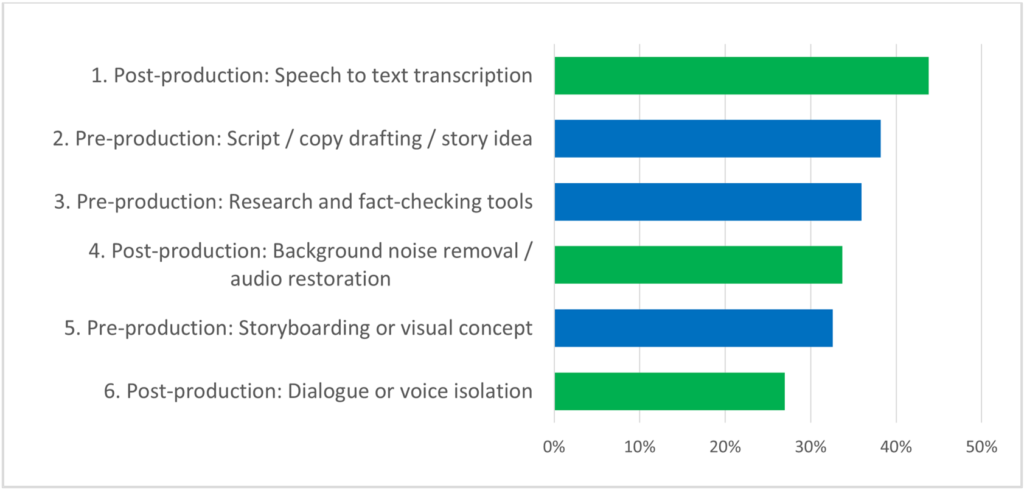
Chart I: Top uses of AI technology in media-related disciplines (source: Connect2 BEA Higher Ed Survey)
Complete AI tool use overview
A full breakdown of AI tool use can be seen here, organised by production stage: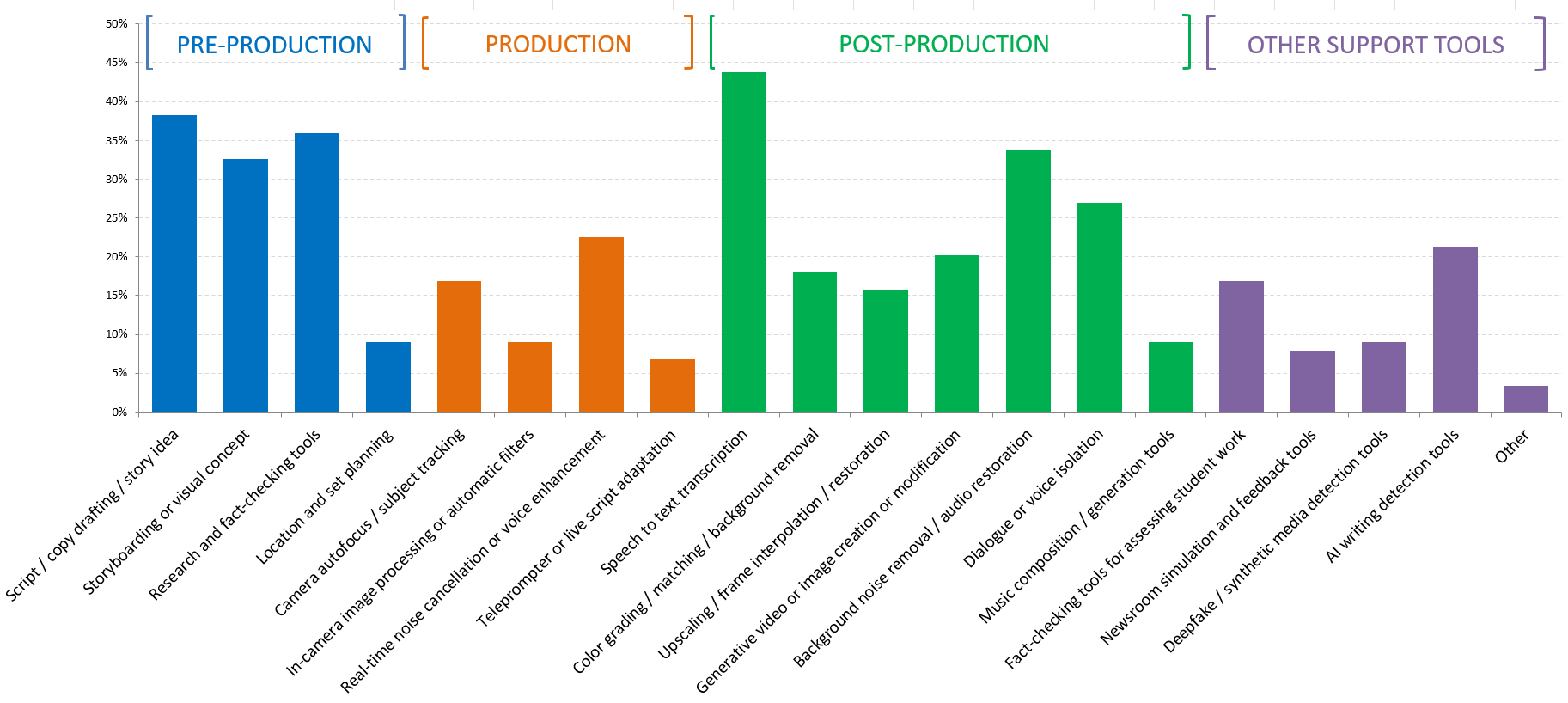
Click here for larger image size
Chart II: How AI is being used in media-related degree curricula (source: Connect2 BEA Higher Ed Survey)
The official line – or do you have one?
So what’s the policy for use of AI in university media programs? The Connect2 research shows that universities are running at different speeds of adoption. Only around 20% describe their policy as ‘embracing AI’. The biggest proportion – around a third – are exploring and using their educators’ best judgement as they go.
Here’s the breakdown in overall approaches being taken:
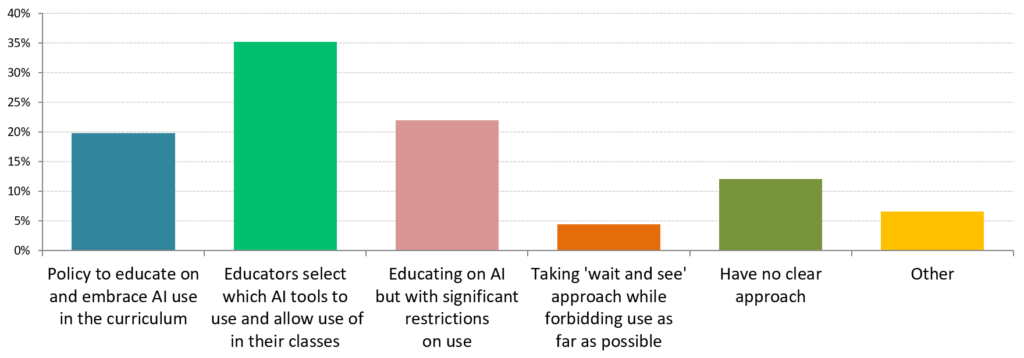
Chart III: University departments’ policy or approach to AI use (source: Connect2 BEA Higher Ed Survey)
Some felt that the way universities approach AI is fragmented or inconsistent. Comments include:
In some courses there’s a clear statement, but not all
Some professors are more accepting to AI than others
But what is broadly apparent is that most schools are looking to educate their students on AI whether they are encouraging and actively using it or not. As one respondent stated:
Students should be aware of all tools and be able to make ethical decisions about their deployment.
Responsible and positive AI use was a general underlying theme. AI is already present in workflows and seen as a useful tool that needs to be critically assessed in how it should be used. This can be exemplified in one respondent’s comment:
Students are encouraged to recognize the benefits that AI brings while understanding the limitations and the ethical use of those tools. It is better to bring it up and discuss it in the classroom than students use it without any consideration.
Generative technologies can be more problematic than other AI tools, with issues going beyond academic integrity. Feedback highlighted issues relating to copyright and lack of legal backing for generatively created materials.
In general, universities are aiming to ensure students understand the types of AI in use, so they are aware of what’s possible and what to avoid. Only a small minority are delaying all engagement with AI while banning current use as far as possible.
What are the advantages of educating on AI?
In terms of assessing how AI is felt to fit within the academic mission, respondents were posed the question: What do you feel are the biggest advantages of embracing AI in your curriculum?
The most common reason provided for following this principle and educating on AI is for workplace readiness, as voiced by one respondent here:
The biggest [advantage] is that employers want students who know how to use AI ethically and responsibly, and in a way that will benefit a newsroom. Our curriculum embraces that approach.
Responses to the question can be quantified as follows:
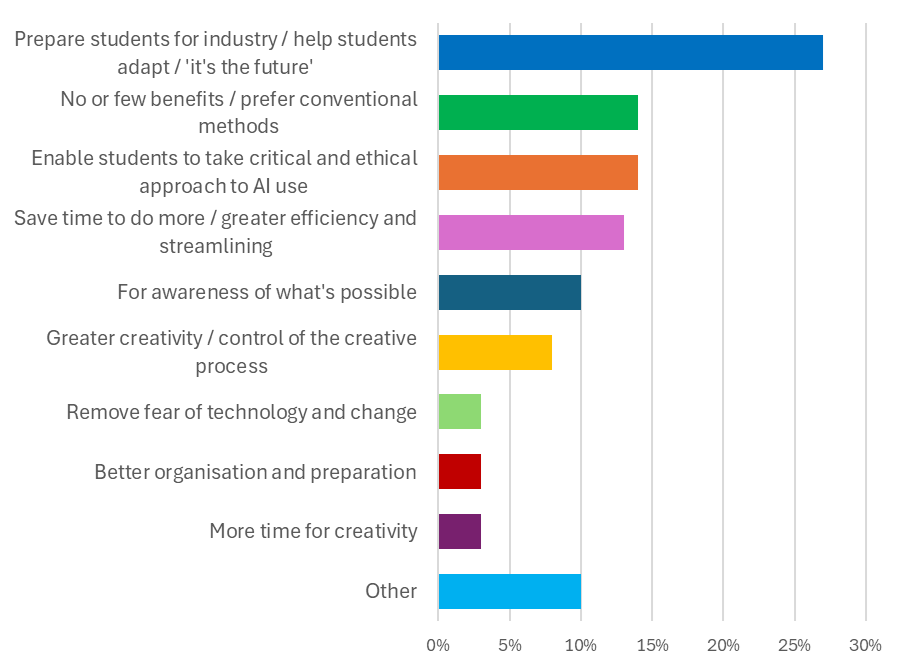
Chart IV: Biggest advantages of embracing AI in the curriculum (source: Connect2 BEA Higher Ed Survey)
While the most common response is for educating with students’ future prospects in mind, these results show there is also significant enthusiasm for what AI can achieve for them today – for the efficiencies and creative opportunities it provides within the classroom and for current student projects.
What media students are saying about AI
Students provided their own feedback on AI use. It’s boosting their creativity, either directly through help with ideation, or by freeing up more time for creativity and project completion by speeding up tasks. It is also thought to offer more opportunity – to try out more systems, creative mediums or make it affordable to do the research and groundwork which would put some projects otherwise out of scope.
Here’s what they said:
AI enhances efficiency, creativity and learning by helping students and educators save time, generate ideas, and improve the quality of work through smart tools and automation
It’s a great stepping stone for research and bridging the gap of knowledge for small crews on a budget
Brainstorming is a big advantage for bouncing ideas
Allows students to use systems they’re not as familiar with and gain a working knowledge in many different areas
The biggest advantages of AI in this curriculum would be organization. Having the ability to work less on organized notes and more on the art of film creativity and content allows for more creativity for directors and creators
However, it’s not just faculty that are exercising caution or showing some unease with AI use in some cases. Here’s what one student told us:
AI is an advancement I’m very weary and cautious about, so I feel embracing it more is a disadvantage
Conclusion
There are different speeds of adoption and attitudes to where and how AI should fit into Higher Ed. Certainly, educating on AI fits with the academic culture of facilitating critical evaluation of tools and media. At the same time it is preparing students for industry and a changing work environment.
There is also enthusiasm for the opportunity it represents within media education itself. While human ingenuity and expression is primarily and conventionally responsible for creativity in media-related disciplines, this creativity can be boosted, accelerated and potentially enhanced through the use of AI tools.
Support for ideation and story boarding is getting students off to a faster start, and post-production processes for achieving standards and effects are becoming faster and easier. However, amongst both faculty and students, not all are embracing AI yet and many are proceeding cautiously and selectively. For faculty, the ability to understand and control its contribution is key with the help of detection tools, and the need to set out clear policies on AI use. Meanwhile, education boards have started issuing guidance that students must still demonstrate independent creative ability.
Looking to the future, the full potential of AI adoption in creative practice and the classroom is unknown. While there is every sign that its role will be developing further, it’s an area that both educators and students will be watching closely.