
Vital Signs: Equipment Use and Media Program Performance
Hands-on learning with equipment is an essential part of media and communications degree programs. Here we explore how successfully universities are supporting this aspect through an analysis of equipment services activity. If students’ reservations and checkouts of equipment are rising, it’s a healthy sign that students are being supported and encouraged to spend time using these resources. This is important: any decline in use may signal that opportunity or interest is also declining and that the programs are failing to thrive in some way.
The annual Broadcast Education Association (BEA) convention is the ideal forum for gathering this data. At the April 2026 gathering, we collected the opinions of over 90 faculty from nearly 80 institutions. We are pleased to report that the findings are both positive and thought provoking, demonstrating that there is overall robust and growing opportunity for students to learn and experiment with cameras, production and broadcast equipment.
Where use of resources is increasing, we’ve thrown light on what’s supporting this trend. In cases where it’s decreasing, the reasons are laid bare. Finally, where there’s room for further growth, there’s suggestions and shared experiences from educators on what would boost equipment use.
The results
Equipment borrowing is seeing an overall increase in many universities. Over 50% reported this is the case with 30% more seeing a steady level of lending activity.
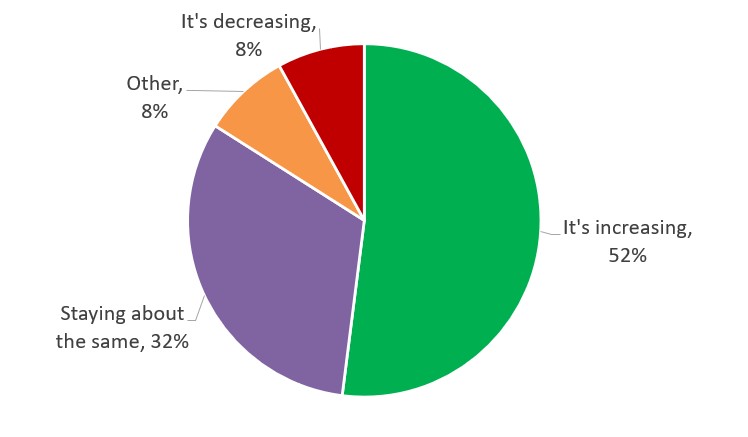
Chart I – Equipment borrowing levels in universities, Connect2 survey, BEA2026
The top 6 factors supporting more equipment borrowing in those institutions seeing an increase are as follows:
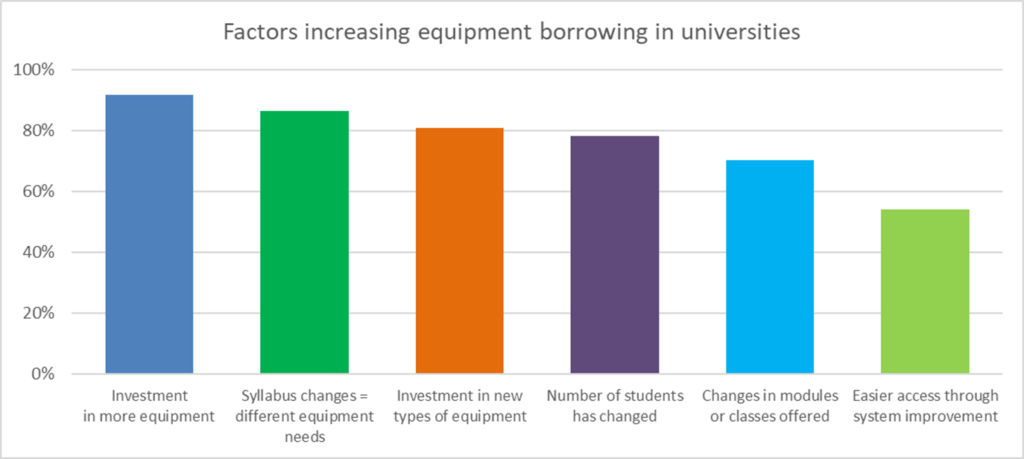
Chart II: Connect2 survey BEA2026
At the same time, factors that are limiting borrowing levels or causing an overall reduction are as follows:
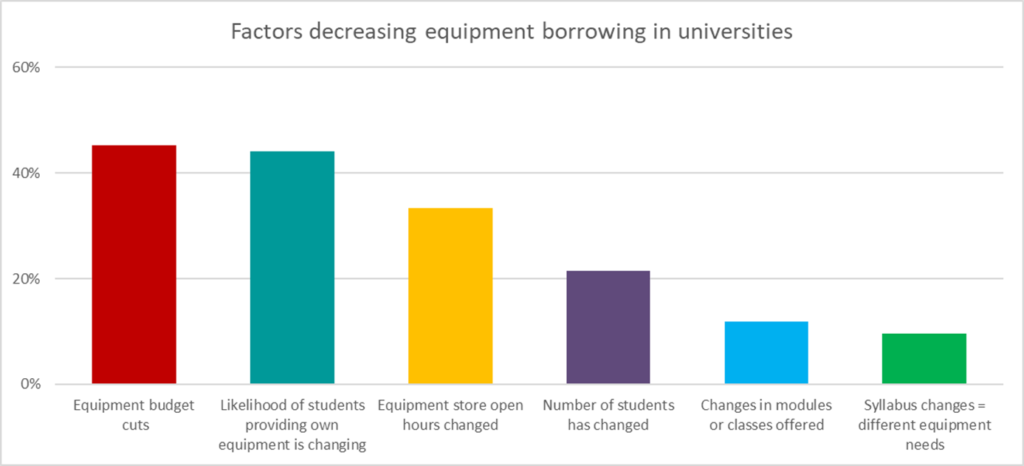
Chart III: Connect2 survey BEA2026
If budget cuts are limiting the amount of equipment you can provide and maintain then this naturally impacts borrowing levels. 45% of participants reported that changes in budget were having this effect.
The likelihood of students providing own equipment isn’t always a positive trend. They may be sticking with their own known camera when more might be learnt by upgrading to a university-issued model. Also, some universities may be providing accessories (e.g. lenses) and additional kit (e.g. mics, lighting, gimbals) to supplement students’ own camera use but they are failing to make use of them.
The more accessible you make your equipment store, the better the service is used. For these universities a change of hours has led to lower usage. Longer hours are better, shorter hours not so good. Even where overall lending was seen to be rising, a fifth felt that more hours held potential for increasing it further.
What would support more equipment use in future?
A wide range of ideas were put forward on what would encourage and support greater use of resources:
Funds: More budget for equipment and the ability to stock a wider range were popular responses. (For tips on winning more equipment funding, check out our earlier guidance here)
Promote and inform: Student awareness of the equipment offer and confidence and opportunity to use it is key. Tutorials and an increase in knowledge on correct use and access will naturally lead to greater uptake. Often students didn’t understand the value of the range of equipment available, and how it may complement or be a better option than their own.
Driving demand: Teaching styles and expectations are naturally playing a role: how many productions are scheduled and how far students are motivated to pursue their own projects. Course requirements in general were mentioned, pointing to a need for syllabus development
Expanding the base: There was a strong call for supporting greater student enrollment. One participant made the distinction between in-residence and online program recruitment, pushing for more on campus students. They had noted a trend towards online learning was marking a move away from production instruction. Other ways to establish wider use included more interdisciplinary collaboration, an increase in minors and making more classes eligible for equipment access. Cross-listing courses was one approach mentioned.
What’s on offer: While some faculty wanted more practical tools, others wanted to offer the latest gadgets, models and specialized systems with VFX specifically mentioned. One simply needed more storage space!
Make access easy: Overall the strongest vote related to improving equipment access. There was a push for longer opening hours for equipment stores, possibly involving more student worker recruitment to help operate them. The reservation process itself was noted to be massively important, that it’s simple and reliable. We can already see from Chart II above on known increases in borrowing, that over half of these universities cited system improvement as a key factor. It’s not surprising it’s high on the wish list for those seeking future growth too.
Of course at Connect2 easy access is something we strongly support having worked with multiple institutions (150+) and seeing their lending programs flourish. Certainly, an easy to use reservation and checkout system is fundamental to a successful equipment service and a massive boost to any teaching program.
Ideas and feedback
In their own words, here’s a range of opinions from university representatives attending BEA on what would help increase and encourage student equipment use:
Increased student enrollment and student workers are the most immediate option
Switching to a paperless reservation and checkout system has been huge
More of a budget to purchase equipment. Also lessons on how to use equipment. Confidence allows curiosity and engagement with equipment
We have a limited amount of equipment and students often struggle to reserve equipment before others
More practical equipment rather than specialized tools
Continuing to stay up to date with the newest gadgets and equipment
Larger selection, more hours to check them out
For a developing program, the ability to increase our stock would be helpful
Increased budget for recruiting more in-residence production students.
Interdisciplinary collaboration with other programs on campus and an increasing number of minors within our program
Continued expansion of course requirements
Helping educate the value of what our lending library has to offer vs what they feel they can do with their own equipment
Greater motivation for students to work on own projects
In conclusion
We’re glad to have reported an encouraging picture: hands-on learning is increasingly central to media and communications education. Many institutions are successfully fostering environments where experimentation and practical skill-building can thrive. At the same time, there are opportunities for reflection and improvement. By understanding what drives both growth and decline in equipment use, educators can better align resources, support, and curriculum design to ensure students continue to benefit from meaningful, real-world learning experiences.