
Student Equipment Access: How It’s Managed

Many students require use of specialized university equipment to support their studies. This might include cameras, audio and lighting equipment for projects in broadcast, journalism and filmmaking. So what are university arrangements for managing access to these resources?
Universities are certainly looking to identify improvements in how it can be done. After all, student attainment and satisfaction can depend on it. Budding journalists and filmmakers won’t be happy if cameras and other essential kit are unavailable when they have project deadlines to meet.
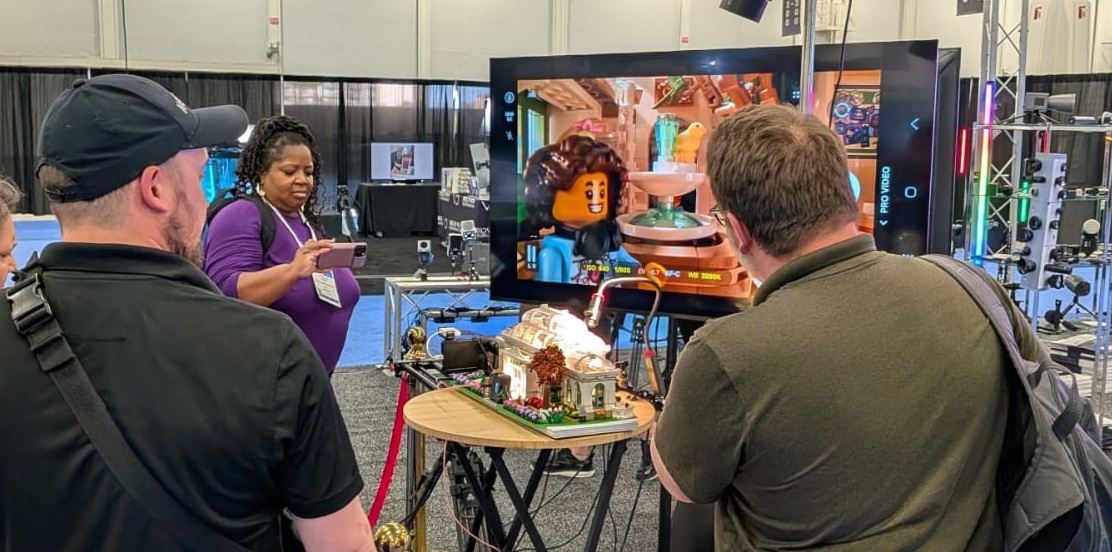
Equipment access is a topic of expertise for Connect2. It was also the focus of a well-attended session at the 2025 Broadcast Education Association (BEA) Convention. We took the opportunity to research the topic further, and gathered the perspectives of over 70 staff representing over 50 universities while attending the event. They described to us the access rules in place at their institutions, how they administer them and how they rate the systems in use. The following is a summary of the findings that throw useful light on this key topic.
How universities control access to student equipment
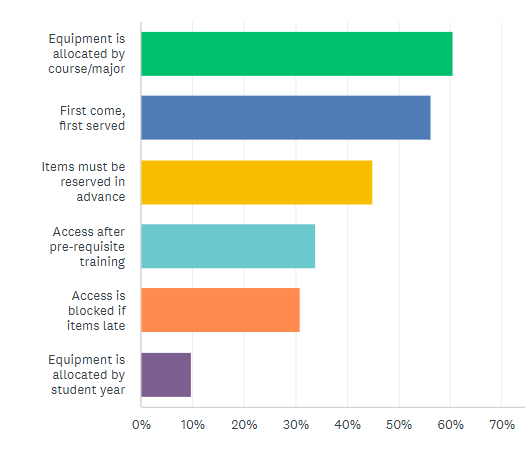
We began by asking how universities control access to resources. The top answer is that it’s dependent on each student’s enrolled programs or major (see the results in the chart above). This makes sense as the equipment involved is often specialized for its related discipline. Items may also be expensive, requiring fairly strict access controls.
‘First come, first served’ is the second most popular approach involved. It can be combined with enabling advance reservations – about a third of respondents do this. It’s certainly a good idea. Without advance bookings, what might seem like a fair approach can leave students unable to plan ahead and some without resources when needed most. ‘First come, first served’ also fails to provide staff with prior warning on what to expect and unable to prepare for each day.
Panellists on the BEA program’s Checkout Time! Current Best Practices in Student Equipment spoke out about importance of advance reservations. It’s an approach we champion at Connect2, and one that’s widely used by customers. It helps checkout staff and enables students to be better organized, having peace of mind their requirements will be met. Around a third of respondents require students to have pre-requisite training before being let loose with equipment. Only a small minority (less than 10%), allocate equipment by year. Anecdotally, we know that in some university departments, more advanced equipment is set aside for students until they progress through their studies. This really pays off in keeping them motivated.
How equipment access rules and policies are applied
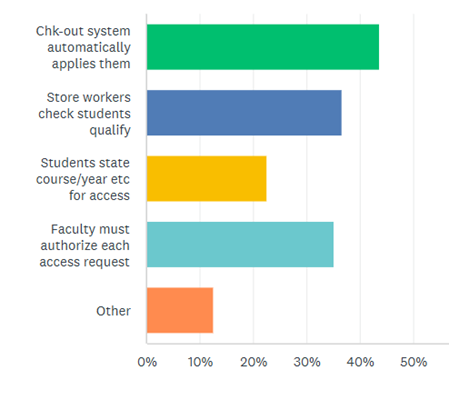
Next we asked how universities apply equipment access rules and policies. Looking at the results in this second chart, it’s great to see universities confirming their checkout systems are helping to apply rules automatically. Busy equipment centers need this support to help speed up the checkout process. It also avoids human errors resulting in the wrong kit being issued to the wrong students.
However, nearly half of those utilizing automatic systems are still requiring workers to carry out further checks. For example over 40% using checkout systems still have faculty authorize each booking. In a few cases, this is for longer loans only, but for others it’s standard procedure. Then over 25% still have store workers check students qualify for access when doing the checkouts.
There are huge benefits when the software understands the identity of each student and whether or not they should be allowed to use each piece of equipment. Reservations and checkouts can only proceed on this basis.
Checkout systems are falling short if they involve such manual processes to apply access rules. We say expect more from your system’s automation, with application of booking rules that fully relieves admin stresses.
Systems used for managing equipment checkouts – Do they meet requirements?
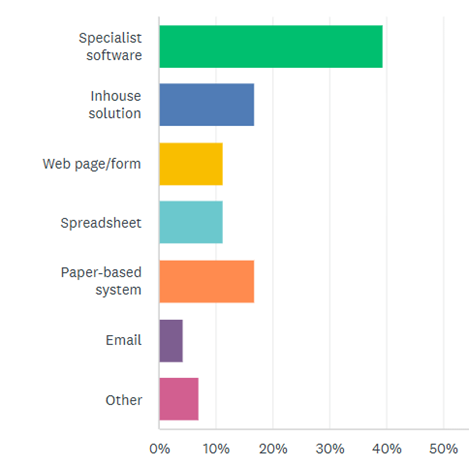
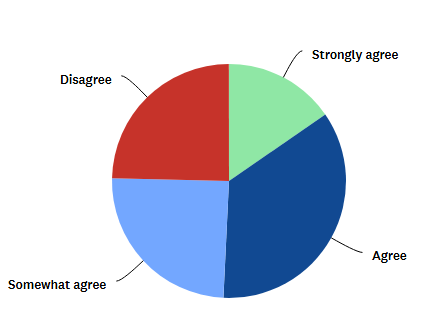
Universities use a variety of methods to manage equipment access. Paper, spreadsheets and web pages/forms all scored poorly for meeting needs for effective management. Feedback on in-house systems was mixed – only half were happy. These systems tend to date quickly as dedicated development and support tails off and they are unable to keep up with growing demands.
The happiest group are those using specialist software. Here, a third are less than satisfied. But as we’ve seen from the previous question’s feedback, expectations on how these systems work are often dashed or lowered by poor automation.
We’re pleased to report though that Connect2 customer universities participating in the research are in strong agreement that the system is meeting their needs. Certainly, the system has strong capabilities to automate tasks and coordinate equipment lending without fuss or error.
We hope you’ve found this research as interesting as we did. In our next article we’ll be exploring the final question answered by our BEA research subjects ‘what helps motivates students most around equipment use?’ Results coming soon!